The Evolution of the Slot: From Mechanical Reels to Digital Frontiers
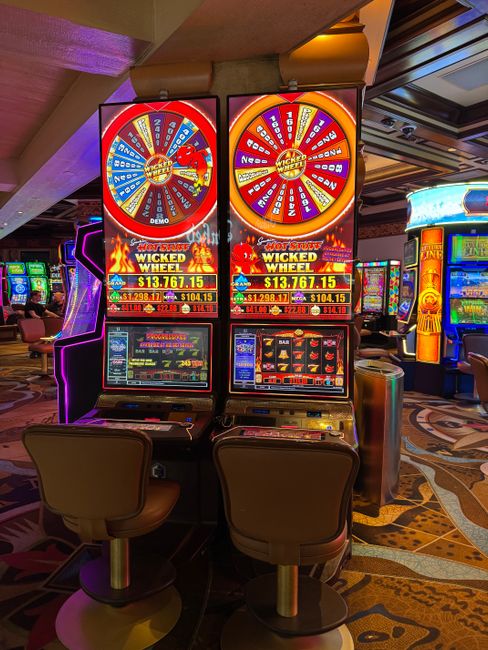
The slot machine, often simply referred to as a 'slot', is one of the most recognizable and enduring fixtures in the world of gaming. Its journey from a rudimentary contraption of spinning reels to a sophisticated digital platform mirrors the broader technological and cultural shifts of the past century. Understanding the slot requires not just a look at its mechanics, but also at its role as a social artifact, a source of entertainment, and a subject of ongoing regulatory and ethical debate.
The Mechanical Genesis of the Slot
The earliest ancestors of the modern slot emerged in the late 19th century. The first true slot machine, the Liberty Bell, was invented by Charles Fey in 1895. This machine was purely mechanical: three spinning reels, each adorned with symbols like horseshoes, diamonds, spades, hearts, and the Liberty Bell itself. The player would pull a lever, the reels would spin, and if three matching symbols aligned, the machine would dispense coins. Its simplicity was its genius. The slot was not about complex strategy like poker or blackjack; it was about pure chance, instant gratification, and the hypnotic rhythm of the spinning reels. By the early 20th century, slots had proliferated in bars, saloons, and cigar shops, becoming a staple of American social life, despite periodic waves of prohibition.
The Transition to Electromechanical and Video Slots
The post-World War II era brought significant change. The Bally Manufacturing Company introduced the first electromechanical slot, Money Honey, in 1963. This innovation replaced purely mechanical parts with electrical components, allowing for larger jackpots, automatic payouts, and more complex game logic. The iconic lever was still present, but the inner workings were now driven by relays and circuits. The true revolution came in the 1970s and 1980s with the advent of video slots. Instead of physical reels, these machines used a video screen to display the game. This freed designers from the physical constraints of spinning reels, allowing for multiple paylines, bonus rounds, and elaborate themes. The slot became a digital canvas, incorporating graphics, sound, and narrative elements that transformed it from a simple game of chance into a full-fledged entertainment experience.
The Digital Era: Online Slots and RNGs
The rise of the internet in the 1990s catalyzed the next seismic shift: the online slot. The digital slot no longer required a physical machine or a casino floor. Players could access a virtually unlimited library of games from their computers. This transition was made possible by the Random Number Generator (RNG), a computer algorithm that ensures each spin is independent and unpredictable. The online slot democratized access and exploded the variety of themes—from ancient Egypt and Norse mythology to blockbuster movies and pop culture icons. Modern online slots often feature cascading reels, cluster pays, progressive jackpots that pool millions of players, and even branded content that mimics video games. The slot ecosystem now includes mobile apps, live dealer hybrids, and virtual reality experiences, pushing the boundaries of what was once a purely mechanical pastime.
Mechanics and Gameplay: Understanding the Modern Slot
Despite the technological complexity, the core mechanics of a modern slot remain elegantly simple. Every spin is governed by a statistical return-to-player (RTP) percentage, which denotes the theoretical long-term payout. Volatility—the frequency and size of wins—varies widely, from low-volatility slots that pay smaller amounts often, to high-volatility slots that pay larger amounts but less frequently. Features like wild symbols (which substitute for others), scatters (which unlock bonuses), and free spins add strategic layers of anticipation. The psychological design is also crucial: near-misses, celebratory sound effects, and visual cues are carefully engineered to maintain engagement. While the slot is fundamentally a game of luck, understanding these parameters helps players make informed choices.
Cultural and Economic Impact
Slots are more than just a pastime; they are a significant economic force. In many jurisdictions, casinos derive the majority of their revenue from slot machines. The industry supports thousands of jobs in game design, software engineering, and hospitality. However, the slot's design also raises critical ethical questions. The rapid play cycle, sensory rewards, and potential for continuous losses can lead to problem gambling. Responsible gaming initiatives, such as deposit limits, time-out features, and self-exclusion programs, have become integral to the industry. Regulatory bodies worldwide enforce strict standards for RNG certification, payout percentages, and advertising—balancing commercial interests with player protection.
The Future of the Slot: Innovation and Regulation
Looking ahead, the slot is set to evolve further. Artificial intelligence may personalize game difficulty or offer dynamic bonus structures. Cryptocurrencies and blockchain technology could introduce provably fair gaming and new payment methods. Augmented reality (AR) and virtual reality (VR) promise to immerse players in entirely new worlds, where the slot becomes an interactive environment rather than a flat screen. Yet, with these innovations come renewed challenges in regulation, data privacy, and ethical design. The slot remains a paradox: a simple game of luck that drives a complex industry, a source of harmless fun for millions, and a subject of serious societal concern. Its evolution is a testament to human ingenuity in creating entertainment, and a mirror reflecting our enduring fascination with chance, reward, and the spin of the wheel.